
Weird Deep Sea Creatures That Look Like Aliens
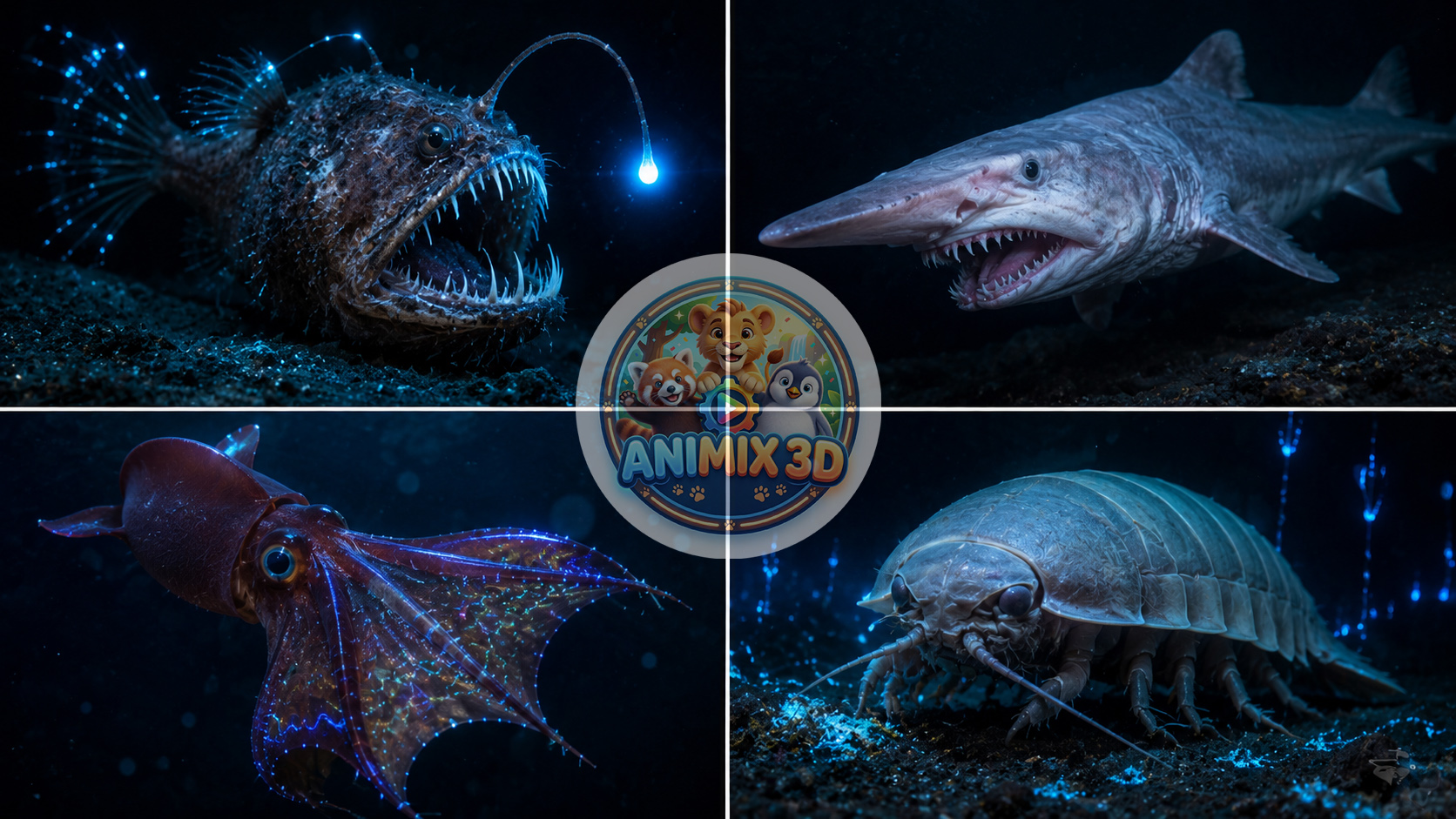
Weird Deep Sea Creatures That Look Like Aliens
The deep ocean remains one of Earth’s greatest mysteries. Scientists estimate that much of the ocean is still unexplored, and countless marine species may still remain undiscovered. Hidden thousands of meters beneath the surface, the deep sea is a dark and extreme environment filled with crushing pressure, freezing temperatures, and almost no sunlight.
To survive these harsh conditions, deep-sea creatures evolved extraordinary adaptations. Some developed glowing bodies, others grew massive jaws, and many possess appearances so strange they seem more suited for science fiction movies than our planet.
Here are some of the weirdest deep-sea creatures that genuinely look like aliens.
1. Anglerfish
The anglerfish may be one of the most frightening creatures found underwater.
Its most recognizable feature is a glowing structure extending from its head. This natural lure produces light through bioluminescent bacteria and attracts prey in the darkness.
Once curious fish swim close enough, the anglerfish attacks quickly with its enormous mouth and sharp teeth.
Its appearance inspired numerous fictional sea monsters.
Despite its terrifying look, the anglerfish demonstrates remarkable evolutionary adaptation.
2. Goblin Shark
The goblin shark looks like something from another world.
This rare shark species possesses a long flattened snout and highly unusual jaws.
What makes goblin sharks truly strange is their ability to rapidly extend their jaws outward when catching prey.
This sudden movement surprises fish before they can escape.
Scientists sometimes call goblin sharks “living fossils” because their ancient relatives existed millions of years ago.
Their unusual appearance makes them among the ocean’s most bizarre predators.
3. Vampire Squid
Despite its frightening name, the vampire squid is not a true squid and does not drink blood.
Its dark body and web-like arms inspired the dramatic name.
When threatened, vampire squids turn themselves inside out in a defensive display called the pineapple posture.
This unusual behavior exposes spines and helps deter predators.
They also possess glowing organs that produce light in darkness.
Their appearance resembles something from a science-fiction movie.
4. Giant Isopod
Imagine a giant underwater version of a pill bug.
That is essentially what a giant isopod looks like.
These creatures can grow much larger than their land relatives.
Living on the ocean floor, giant isopods survive as scavengers.
Because food can remain scarce in deep environments, they evolved the ability to survive long periods without eating.
Some reportedly live for months—or even years—between meals.
5. Barreleye Fish
The barreleye fish possesses one of the strangest heads in nature.
Its head appears transparent.
Inside this clear dome, scientists can see rotating eyes.
These unusual eyes help the fish look upward while searching for prey in dark waters.
For years researchers misunderstood their eye structure because observing deep-sea species remains difficult.
The barreleye fish continues fascinating marine scientists.
6. Dumbo Octopus
The Dumbo octopus received its name because of ear-like fins resembling the famous cartoon elephant.
Unlike many deep-sea predators, Dumbo octopuses appear surprisingly adorable.
They swim gracefully using their fins while living at extraordinary depths.
Because few animals survive in such environments, researchers still know relatively little about them.
Their gentle appearance contrasts strongly with many other strange deep-sea creatures.
7. Fangtooth Fish
The fangtooth fish possesses some of the largest teeth relative to body size among ocean fish.
Its mouth appears too small for its enormous teeth.
Fortunately, fangtooth fish remain relatively small and pose no danger to humans.
Their intimidating appearance helps them survive difficult deep-sea environments.
Why Deep Sea Animals Look So Strange
Deep ocean environments create unique evolutionary pressures.
Animals adapt to challenges including:
- Extreme darkness
- Intense pressure
- Cold temperatures
- Limited food sources
- Isolation
Because sunlight rarely reaches these depths, appearance often matters less than survival ability.
Many species evolved unusual features including:
- Bioluminescence
- Enlarged eyes
- Flexible jaws
- Transparent bodies
- Sensitive organs
What appears strange to humans often represents extraordinary survival strategies.
Why Scientists Continue Exploring the Deep Sea
Researchers believe much of the ocean remains unexplored.
Every year scientists discover species never seen before.
Studying deep-sea creatures helps researchers understand:
- Evolution
- Marine ecosystems
- Biological adaptation
- Potential medical discoveries
Some organisms may even inspire future technologies.
The ocean continues holding secrets waiting to be discovered.
Final Observation
The deep ocean is filled with creatures so bizarre they challenge imagination.
From glowing anglerfish and transparent barreleye fish to giant underwater insects and vampire squids, these species reveal the incredible creativity of evolution.
While they may look alien, each adaptation helps them survive one of the harshest environments on Earth.
As exploration technology improves, scientists may uncover even stranger creatures hiding in the dark depths of our planet’s oceans.
FAQ
Why do deep-sea creatures glow?
Many deep-sea animals use bioluminescence to attract prey, communicate, or avoid predators.
What is the strangest deep-sea animal?
Many scientists consider the goblin shark and barreleye fish among the strangest species.
How deep do these animals live?
Some deep-sea creatures live thousands of meters below the ocean surface.
Have humans explored most of the ocean?
No. Large portions of the deep ocean remain unexplored.

Leave a Comment